

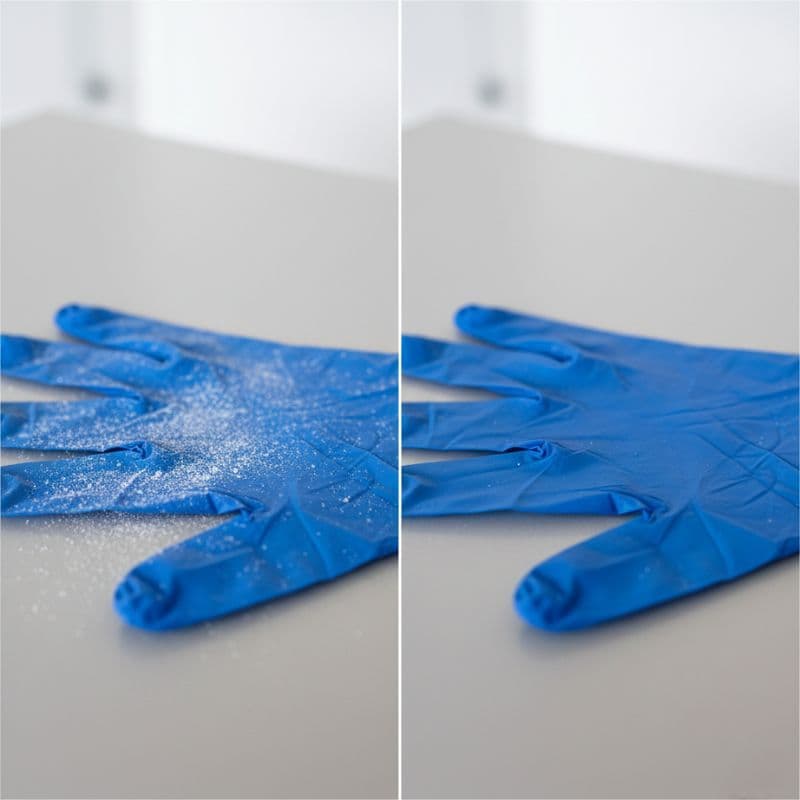
For decades, powdered gloves were widely used across medical, laboratory, and industrial environments. The added powder made gloves easier to don and remove, especially during high-volume use.
However, as safety research evolved and regulatory standards tightened, the industry gradually shifted toward powder-free gloves.
Today, in most professional healthcare and regulated environments, powder-free gloves are considered the modern standard.
This report explains the differences, risks, regulatory changes, and why powder-free gloves have become the preferred choice worldwide.
Powdered gloves contain a light dusting of absorbable cornstarch powder inside the glove.
The original purpose of the powder was simple:
• Reduce friction
• Make gloves easier to put on
• Absorb moisture from hands
• Improve speed in busy environments
In high-volume settings, powdered gloves were once viewed as practical and efficient.
Over time, research and real-world experience revealed several safety concerns associated with powdered gloves.
When gloves are donned or removed, powder particles can become airborne.
This may lead to:
• Respiratory irritation
• Contamination of sterile environments
• Transfer of microorganisms
In operating rooms and laboratories, airborne contamination presents serious risk.
Powder can bind to latex proteins in latex gloves, making them airborne and increasing exposure.
This may trigger:
• Skin irritation
• Respiratory sensitivity
• Contact dermatitis
• Severe allergic reactions in sensitive individuals
Even in non-latex gloves, powder particles can cause irritation.
In surgical environments, glove powder has been linked to:
• Inflammatory reactions
• Delayed wound healing
• Adhesion formation
• Post-operative complications
For this reason, powdered gloves are no longer acceptable in many medical institutions.
Powder can contaminate:
• Medical instruments
• Laboratory samples
• Food products
• Cleanroom environments
In food processing and pharmaceutical manufacturing, contamination risk is unacceptable.
Due to safety concerns, several regulatory bodies have taken action.
For example:
• The U.S. FDA banned powdered surgical gloves.
• Many hospitals globally prohibit powdered gloves in sterile areas.
• Modern healthcare procurement policies increasingly specify powder-free only.
These regulatory trends reflect a global movement toward contamination control and enhanced patient safety.
Powder-free gloves are manufactured without internal cornstarch powder.
Instead of powder, manufacturers use:
• Chlorination processes
• Polymer coating
• Advanced internal finishing
These techniques reduce friction and make gloves easier to don — without the contamination risks associated with powder.
Without loose powder particles, there is:
• No airborne spread
• No surface contamination
• No interference with sterile procedures
This is critical in medical and laboratory settings.
Powder-free gloves:
• Reduce protein dispersal in latex gloves
• Minimize skin irritation
• Improve workplace compatibility
Many institutions standardize powder-free gloves to minimize allergy-related liability.
Powder-free gloves are considered:
• Cleaner
• More modern
• More compliant with current hygiene protocols
They align with stricter infection control guidelines.
Powder-free gloves are strongly preferred in food industries because:
• They eliminate contamination risk
• They prevent residue transfer
• They support food safety compliance
Many food safety regulations recommend powder-free materials.
Below is a simplified professional comparison.
Ease of Donning
Powdered: Easy
Powder-Free: Easy (Modern polymer coating)
Airborne Contamination
Powdered: Possible
Powder-Free: None
Allergy Risk
Powdered: Higher
Powder-Free: Lower
Sterile Environment Suitability
Powdered: Not Recommended
Powder-Free: Recommended
Modern Compliance
Powdered: Limited Acceptance
Powder-Free: Standard Practice
Despite the shift, powdered gloves may still appear in:
• Low-risk industrial settings
• Non-medical commercial environments
• Budget-sensitive operations
However, even in these environments, powder-free alternatives are increasingly replacing them.
The market shift toward powder-free gloves is driven by:
• Stricter infection control standards
• Legal liability concerns
• Workplace allergy management
• Increased hygiene awareness
• Regulatory bans in surgical use
As awareness increased, powder-free became the responsible default choice.
Historically, powdered gloves were slightly cheaper due to simpler manufacturing.
Today, however:
• Powder-free gloves are widely available
• Production technology has improved
• Price differences are minimal in many markets
Given the reduced risk and regulatory advantages, powder-free gloves offer stronger long-term value.
Organizations seeking modern compliance should consider:
• Standardizing powder-free gloves across departments
• Eliminating powdered inventory to reduce risk
• Updating internal hygiene policies
• Training staff on contamination control
Transitioning fully to powder-free reduces complexity and improves safety alignment.
Powder-free gloves are strongly recommended for:
• Hospitals and clinics
• Laboratories
• Surgical centers
• Food processing facilities
• Pharmaceutical production
• Cleanroom environments
In these settings, powdered gloves are no longer considered acceptable.
Powdered gloves once served a practical purpose — but modern safety standards have surpassed them.
Powder-free gloves provide:
• Cleaner environments
• Reduced allergy risk
• Improved compliance
• Lower contamination potential
• Alignment with global regulatory standards
For professional environments, powder-free is not just an option.
It is the modern standard.
Workplace safety evolves with research and regulation.
What was once common practice may no longer meet today’s expectations.
Powder-free gloves represent a shift toward:
Higher hygiene standards
Better patient protection
Improved occupational safety
Reduced institutional liability
Organizations that adopt powder-free as their standard demonstrate commitment to safety, compliance, and responsible procurement.
In today’s healthcare and regulated industries, powder-free is not simply preferred.
It is expected.


