

Selecting the correct disposable glove material is not simply about availability or cost — it is about performance, protection level, and suitability for specific tasks.
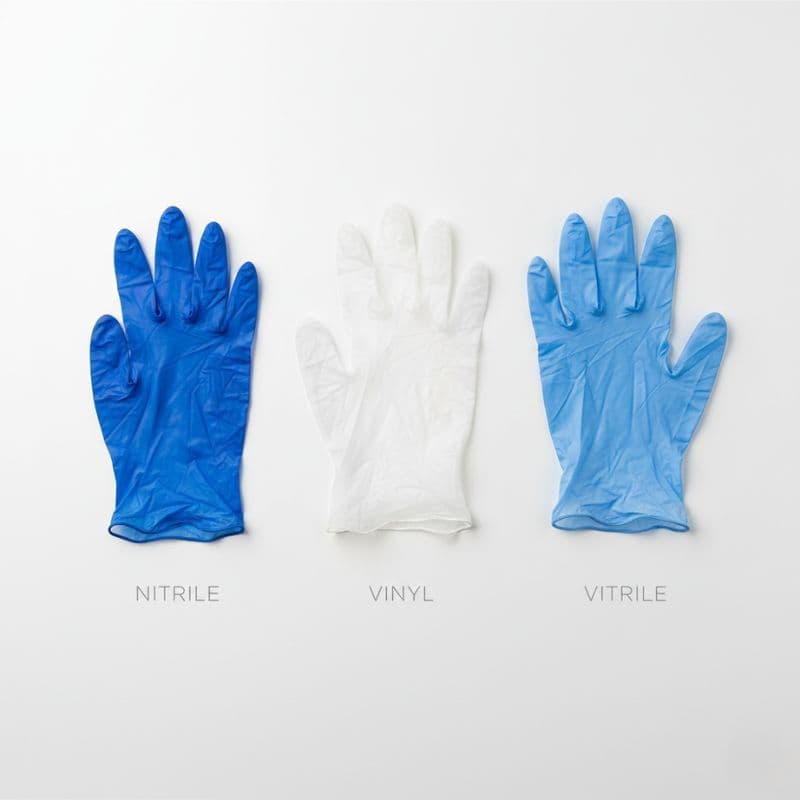
With multiple glove types available in the market — including nitrile, vinyl, and vitrile — procurement managers and healthcare professionals must understand the real differences between them.
Each material offers unique advantages and limitations. Choosing incorrectly may lead to compromised safety, reduced durability, or unnecessary operational costs.
This guide provides a clear, professional breakdown to support informed purchasing decisions.
Before comparing performance, it is important to understand what each material actually is.
Nitrile gloves are made from synthetic nitrile butadiene rubber (NBR). They were originally developed as an alternative for individuals allergic to latex but have since become the preferred material in many professional environments.
They are known for:
• High puncture resistance
• Strong chemical resistance
• Latex-free composition
• Reliable barrier protection
Nitrile gloves are widely used in medical, laboratory, dental, tattoo, and industrial applications.
Vinyl gloves are manufactured from polyvinyl chloride (PVC). They are typically the most economical disposable glove option.
They are known for:
• Lower cost
• Smooth surface
• Easy donning
• Suitable for short-duration, low-risk tasks
However, vinyl gloves offer reduced elasticity and lower resistance to tearing compared to nitrile.
They are commonly used in:
• Food handling
• Cleaning tasks
• Low-risk environments
• High-volume commercial use
Vitrile gloves are a hybrid material that blends vinyl and nitrile components.
They were designed to improve upon traditional vinyl gloves by offering:
• Better elasticity than vinyl
• Improved puncture resistance
• Enhanced durability
• Competitive pricing
Vitrile aims to bridge the gap between vinyl affordability and nitrile strength.
When choosing between these materials, five key factors must be evaluated:
Nitrile provides the strongest barrier against bloodborne pathogens and contaminants.
Vitrile offers moderate protection — superior to vinyl but below high-grade nitrile.
Vinyl provides basic barrier protection suitable for low-risk exposure.
For medical environments, nitrile remains the gold standard.
This is one of the most important differences.
Nitrile: Excellent resistance
Highly resistant to punctures, tears, and mechanical stress.
Vitrile: Moderate resistance
Stronger than vinyl but not as durable as nitrile.
Vinyl: Low resistance
More prone to tearing under tension or stress.
Environments involving sharp instruments or extended wear strongly benefit from nitrile.
If gloves are used in contact with chemicals, solvents, or disinfectants, material choice becomes critical.
Nitrile performs significantly better against oils, fuels, and many chemical substances.
Vinyl and vitrile offer limited resistance and may degrade faster in chemically intensive settings.
Comfort directly impacts user compliance and productivity.
Nitrile:
Modern nitrile gloves provide high flexibility and comfortable fit.
Vitrile:
More flexible than vinyl, offering acceptable comfort for mid-range tasks.
Vinyl:
Less elastic and looser fitting. Best suited for short-duration use.
For precision work requiring tactile sensitivity, nitrile remains superior.
Budget considerations are essential for large institutions and distributors.
Vinyl is typically the most affordable option.
Vitrile sits in the mid-range category.
Nitrile is generally more expensive but offers higher durability.
However, true cost efficiency must consider:
• Replacement frequency
• Tear rate
• Waste
• Safety incidents
Cheaper gloves may lead to higher operational costs if they fail prematurely.
Choosing the right glove depends entirely on the intended use.
• Hospitals and clinics
• Laboratories
• Dental practices
• Tattoo studios
• Automotive and mechanical work
• Chemical handling
Nitrile is best for environments requiring maximum protection and reliability.
• Food service
• Cleaning services
• Retail handling
• Short, low-risk tasks
Vinyl is suitable when cost control is the primary concern and risk exposure is minimal.
• Medical facilities with moderate exposure
• Food processing with improved protection needs
• High-volume commercial applications
• Budget-sensitive healthcare providers
Vitrile offers a balanced solution when institutions want better performance than vinyl without full nitrile cost.
Professional disposable gloves should comply with relevant standards such as:
• EN 455 (Medical Examination Gloves)
• EN ISO 374 (Chemical Protection)
• ASTM D6319 (Nitrile Specification)
• FDA Registration (where applicable)
Certification ensures that minimum quality and safety thresholds are met.
Always verify documentation before procurement decisions.
Globally, healthcare institutions are increasingly transitioning toward nitrile due to:
• Increased awareness of infection control
• Latex allergy management
• Stricter compliance requirements
• Improved manufacturing technology
However, vinyl and vitrile remain highly relevant in commercial and non-critical applications.
Instead of selecting one glove type for all departments, many institutions now adopt a multi-tier approach:
• Nitrile for high-risk areas
• Vitrile for moderate-risk departments
• Vinyl for low-risk, high-volume tasks
This strategy balances safety and cost efficiency across operations.
There is no universally “best” glove material.
The correct choice depends on:
Risk level
Exposure type
Regulatory requirements
Budget constraints
Frequency of use
For maximum protection and compliance, nitrile leads.
For cost-sensitive, low-risk applications, vinyl remains practical.
For balanced performance and affordability, vitrile offers a competitive alternative.
Understanding the real differences between nitrile, vinyl, and vitrile gloves empowers organizations to make smarter, safer purchasing decisions.
Disposable gloves are not just consumables — they are protective barriers that directly impact safety, hygiene, and operational efficiency.
Selecting the appropriate material ensures both protection and performance — without unnecessary compromise.


