

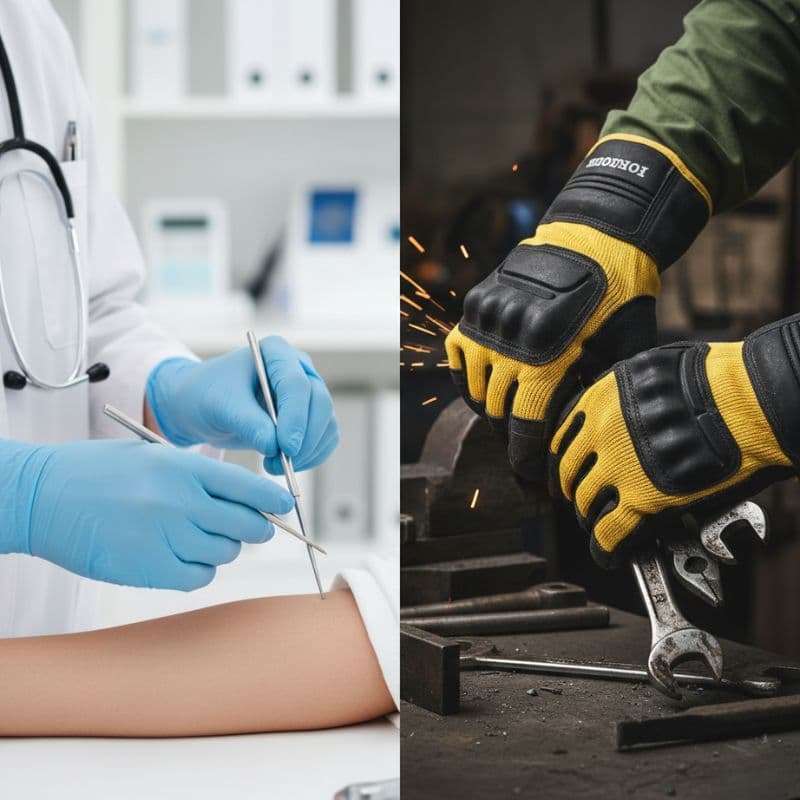
Gloves are one of the most essential forms of personal protective equipment (PPE).
However, not all gloves are designed for the same purpose.
A common mistake in workplaces is assuming that industrial safety gloves and examination gloves can be used interchangeably. In reality, they are engineered for entirely different types of risks.
Understanding the structural, material, and safety differences between these two categories is critical for maintaining compliance, reducing workplace injuries, and protecting staff.
This report provides a clear, professional breakdown to help organizations choose the correct glove for the correct environment.
Examination gloves — often made from nitrile, latex, vinyl, or vitrile — are disposable gloves primarily designed for:
• Hygiene control
• Infection prevention
• Barrier protection against contaminants
• Short-duration tasks
They are commonly used in:
• Hospitals
• Clinics
• Laboratories
• Dental practices
• Food handling
• Beauty and cosmetic services
The core function of examination gloves is biological barrier protection.
They are designed to protect against:
• Bloodborne pathogens
• Bodily fluids
• Microorganisms
• Light chemical exposure
They are thin, flexible, and disposable, prioritizing tactile sensitivity and hygiene compliance over mechanical durability.
• Lightweight material (typically 3–5 mil thickness)
• Designed for single use
• High tactile sensitivity
• Comfortable for precision tasks
• Limited mechanical resistance
Examination gloves are not built to withstand heavy abrasion, sharp objects, or intense physical labor.
Industrial safety gloves are engineered for mechanical protection rather than biological barrier control.
They are commonly made from:
• Nitrile-coated fabric
• Latex-coated polyester
• Cut-resistant fibers
• PVC
• Leather
• Rubberized materials
They are widely used in:
• Construction
• Manufacturing
• Automotive repair
• Warehousing
• Mechanical workshops
• Heavy-duty industrial environments
Industrial gloves are designed to protect against:
• Abrasion
• Cuts and lacerations
• Impact
• Mechanical stress
• Grip-related hazards
• Heavy material handling
Their function is not infection control — it is physical hazard protection.
One of the most important distinctions lies in how these gloves are constructed.
Examination gloves:
Typically 3–5 mil thick for flexibility.
Industrial gloves:
Significantly thicker and reinforced for durability.
Examination gloves:
Single-use, disposable.
Industrial gloves:
Often reusable depending on material and exposure.
Examination gloves:
Smooth or lightly textured fingertips.
Industrial gloves:
Palm-coated or fully coated for enhanced grip in dry, wet, or oily conditions.
Examination gloves:
Fully sealed design for contamination control.
Industrial gloves:
Often partially breathable fabric backs to reduce sweat during long shifts.
Understanding the type of risk determines the correct glove.
• Contamination
• Infection transmission
• Biological exposure
• Light chemical contact
• Mechanical injury
• Sharp objects
• Heavy tools
• Abrasive materials
• Workplace impact
Using an examination glove in a mechanical environment can lead to rapid tearing and injury.
Using an industrial glove in a sterile medical procedure compromises hygiene standards.
Examination gloves often comply with:
• EN 455 (Medical Examination Gloves)
• ASTM D6319 (Nitrile Standard)
• Food safety regulations
• FDA registration (where applicable)
Industrial safety gloves typically comply with:
• EN 388 (Mechanical Protection)
• ANSI/ISEA 105 (Cut & abrasion resistance)
• EN ISO 21420 (General protective glove requirements)
The certification itself reflects the glove’s intended function.
Choose examination gloves when:
• Performing medical procedures
• Handling biological materials
• Conducting laboratory tests
• Preparing food
• Providing personal care services
• Maintaining hygiene standards
They are ideal for environments where contamination control is the primary concern.
Choose industrial gloves when:
• Handling tools and machinery
• Working in construction
• Managing warehouse logistics
• Lifting heavy materials
• Working with metal or sharp objects
• Performing automotive repairs
They are essential when physical injury risk exists.
One of the most frequent safety errors is using disposable gloves in industrial environments.
Why this is dangerous:
• Examination gloves tear easily under mechanical stress
• They do not protect against cuts
• They provide minimal abrasion resistance
• They may create a false sense of protection
Similarly, using thick industrial gloves in sterile environments can:
• Compromise hygiene
• Reduce tactile precision
• Interfere with medical procedures
Choosing the wrong glove type increases liability and risk.
Modern organizations often adopt a dual-glove strategy:
• Examination gloves for hygiene and contamination control
• Industrial gloves for mechanical hazard protection
This structured approach ensures:
• Compliance with safety regulations
• Reduced injury incidents
• Improved workflow efficiency
• Clear departmental standardization
Procurement teams should never treat these categories as interchangeable.
Some organizations attempt to reduce expenses by limiting glove types.
However, misapplication often leads to:
• Increased glove consumption
• Workplace injuries
• Higher liability risk
• Regulatory violations
Selecting the correct glove for each task is more cost-effective in the long term.
Industrial safety gloves and examination gloves serve entirely different purposes.
Examination gloves are designed for:
Hygiene. Contamination control. Biological protection.
Industrial gloves are designed for:
Mechanical resistance. Physical safety. Workplace hazard protection.
They are not substitutes for each other.
Understanding this distinction protects employees, improves compliance, and strengthens workplace safety standards.
Gloves may appear similar at a glance — but their engineering reflects very different protective priorities.
Choosing between industrial and examination gloves should always be based on:
• Type of risk
• Work environment
• Regulatory requirements
• Duration of use
• Hazard exposure level
The right glove is not simply a consumable item.
It is a safety decision.
When organizations align glove type with actual workplace risk, they create a safer, more compliant, and more efficient operation.


